11:41AM, Friday 12 December 2025

Monthly column by Laura Reineke, clean water campaigner
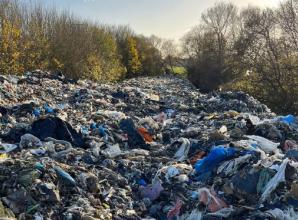
WHEN the Cherwell mega-dump was uncovered just over three weeks ago, none of us expected to be staring at the biggest environmental scandal the Thames catchment has ever seen.
What started as a few strange sightings by local people quickly grew into a mountain of shredded waste — plastics, foam, timber and who knows what else — piled directly on the floodplain of the River Cherwell.
It was the Friends of the Thames, my grassroots charity, which broke the story, raised the alarm and pushed it into the national spotlight. But the more we learned, the more shocking it became.
This wasn’t just unsightly rubbish and the truth is, we still don’t know exactly what’s in it because the Environment Agency only carried out its first tests on the waste five months after the dumping began.
What we can say is that the site is an illegal landfill. Waste piled in this way, without oxygen and without proper capping or ventilation, inevitably begins to decompose anaerobically, producing high-ammonia leachate (source, ex-head of evidence Thames21) — the signature of breaking-down food waste, nappies, dog waste and other nitrogen-rich materials.
Alongside this, mixed household and industrial waste typically contains plastics, oils, electronics, roofing materials, dyes, pesticides and countless other products that can release polycyclic aromatic hydrocarbons (PAHs) and other toxins as they degrade.
These substances are not harmless: they are persistent, mobile and capable of entering river systems through groundwater, heavy rain or flooding. Once in the system, they can bind to sediments downstream — often at higher concentrations than in the water itself — posing long-term risks to wildlife and ecosystems.
Everything about this site was dangerous. Everything about it was predictable. And worst of all — everything about it was preventable.
The Environment Agency, which should have acted the moment the first complaints were made, did nothing for five months.
Five months in which hundreds of tonnes of waste were dumped. Five months in which one simple intervention — a concrete block in the gateway, or even a single cheap camera — could have stopped the entire operation in its tracks.
Instead, we now face a clean-up bill estimated at £25 million —
£25 million that could have been saved with a £200 concrete barrier. This is why I say, without hesitation and without malice, that the agency is not fit for purpose in its current form.
The people working there care but the system is broken — underfunded, understaffed and structurally unable to protect our rivers.
While regulators stood still, it was the public — local anglers, walkers, paddleboarders, residents and eventually us who spotted, recorded, reported, documented and pushed this issue until action finally began.
What we need is more eyes on our rivers — everywhere.
The Cherwell disaster is exactly why we must expand our “River Guardian” network across the entire Thames catchment. Because this should never happen again.
Because rivers cannot report crimes. Because the Environment Agency cannot be everywhere. But we can.
River Guardians are trained, supported local volunteers — ordinary people who care about the places they walk, paddle, swim, fish and live beside.
They spot early warning signs. They record pollution. They know their rivers better than anyone. If we had a strong, linked-up Guardian network along the Cherwell, this waste mountain would have been identified and stopped long before it became a £25 million catastrophe.
This isn’t about shifting responsibility from regulators to citizens. This is about reality.
Our rivers need a community shield — a human early-warning system — and Friends of the Thames is building exactly that.
When a river is weakened, a shock event like the mega-dump can push it past a tipping point. And everything flows downstream. Pollution in the Cherwell becomes pollution in the Thames.
We simply cannot rely on overstretched, under-resourced institutions to catch every threat — especially when, as we’ve seen, even obvious red flags go unchallenged.
We want River Guardians on every tributary, every waterway, every corner of the Thames catchment — from the smallest chalk stream to the estuary. The more Guardians we have, the fewer disasters will slip through the cracks.
We are calling for:
l Full funding for a Thames-wide River Guardian programme
l Proper tools and training for communities
l Accountability and reform within the regulatory system
l Stronger enforcement to stop illegal dumping at source
l Immediate intervention and long-term remediation at Cherwell
The Cherwell mega-dump is a tragedy. But it is also a turning point — if we choose to make it one.
Together, we can build a river network that is never blindsided again.
Most read
Top Articles
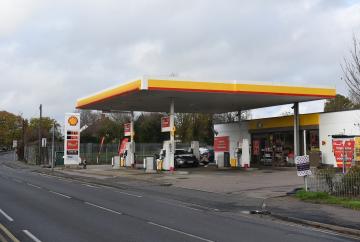
Police officers were called to the Shell Garage in Burnham Lane shortly before 1.45am on Tuesday following reports a woman had suffered serious injuries.
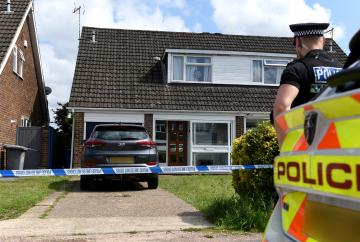
Police were called to an address in Dunholme address earlier this year (archive image)
Police were sent to a house in Dunholme End on the evening of June 10, where a four-year-old boy was pronounced dead at the scene.

Drivers are being advised to follow diversion signs due to the closure
Drivers using the M4 between Slough and Maidenhead have been warned to expect disruption as emergency services battle a fire on a heavy goods vehicle.
© Copyright 2024 Baylis Community Media CIC All right reserved