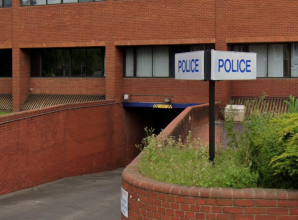
Archive police image.
The police force must handle conduct complaints against its staff better, says an inspection report – having failed at times to refer serious cases up to a higher authority.
HMICFRS (His Majesty’s Inspectorate of Constabulary and Fire & Rescue Services) assesses the effectiveness of police and fire services.
In its latest inspection, it found that Thames Valley Police ‘Requires improvement’ in terms of upholding standards of professional behaviour. This includes acting on misconduct allegations.
TVP told inspectors that in 2024 it held 64 gross misconduct hearings. This is a 146 percent increase on the previous year. It dismissed 49 officers – an increase of 220 percent.
But the force needs to improve the way it handles conduct allegations, the watchdog said.
Inspectors looked at 19 misconduct cases investigated by the force’s professional standards department (PSD).
In 13 of these, the department had not clearly written down what exactly the investigation was supposed to examine and what questions it needed to answer.
Moreover, HMICFRS found nine complaint cases which required a mandatory referral to the Independent Office for Police Conduct – but the force only referred three.
These included sexual offences, a serious assault and a racially aggravated public order offence (threatening, abusive or disorderly behaviour).
Timings are also an issue. TVP takes an average of 206 working days to complete complaint investigations. That is slower than similar forces (173 days on average).
Furthermore, in 11 of the 19 complaint cases inspectors reviewed, the force took more than 14 working days to notify the complainant of its handling decision.
“The force didn’t always fully update complainants with a rationale as to how it had decided to handle each complaint,” the HMICFRS wrote.
The watchdog had further criticisms for how complaints are being handled and whether this is being done via the proper pathways.
Sometimes, instead of putting complaints through the formal legal process, the complaints team is resolving them through ‘service recovery’ – usually a more informal apology, explanation or quick fix.
Inspectors found that senior officers were not properly checking whether those decisions were appropriate.
HMICFRS said TVP needs to make sure that police personnel of appropriate seniority make decisions on how to handle complaints.
Looking at the culture within the force, inspectors found staff had ‘limited knowledge’ of changes TVP has introduced in response to things that have gone wrong in the past.
Additionally, the force doesn’t formally check that its staff is well-versed on expected standards, HMICFRS found.
Staff further told inspectors that they do not often see PSD officers in person.
PSD staff said their workload has risen sharply since 2022 – and because they are dealing with more cases, they have less time to be out and about in the organisation.
“We encourage PSD personnel to raise their profile,” wrote HMICFRS.
“This would support senior leaders across the force to reinforce the standards of professional behaviour.”
Responding to the report, Deputy Chief Constable Ben Snuggs said that the positives of the report acknowledged ‘the swift logging of public complaints’ and the force’s ‘transparency and accountability through misconduct processes.’
He said TVP remains ‘unequivocal’ in its commitment to continual improvement.
Most read
Top Articles

A woman was found dead in a car park outside Iceland and B&M Home Store in Montrose Avenue on Saturday afternoon (February 21).

A hotel by the Maidenhead riverside has reopened following major interior refurbishment.
A teenage boy has been found dead at the historic Eton College.
© Copyright 2024 Baylis Community Media CIC All right reserved