09:30AM, Monday 01 December 2025
THE November meeting of Wargrave Local History Society was a presentation by local historian and author Caroline Piller about the history of horse dealers in Reading in the 19th and early 20th centuries, including the Irishman, Oliver Dixon.
As the third child and eldest son of a poor Irish farming family in County Mayo, Dixon had humble beginnings. In the 1860s agricultural life was hard and it was not many years since the Potato Famine which had devastated so many communities.
The Dixons raised horses which were shipped to England and 10-year-old Oliver’s job was to ride them round the stable yard for the potential buyer to see.
On one occasion the buyer was Michael Donovan, a horse dealer from Reading who was so impressed by the boy that he offered to take him to England to learn a trade and make his way in the world. His parents agreed and so began a successful career but he never forgot his roots in the west of Ireland.
Michael Donovan was one of eight or more horse dealers in the Reading area and Oliver became highly regarded as having very good judgement of a horse’s potential.
After several years he married Lucy, Michael Donovan’s sister-in-law, and played an increasing role in the business when Michael died after being kicked by a horse.
Three years later, in 1894, he bought the business from Michael’s widow, Ella.
The late Victorian and Edwardian years were good for Oliver. He bought a large plot of land off Crescent Road, near to Palmer Park in east Reading, where he built substantial equestrian facilities.
He attracted wealthy clients, inviting them to use the new telegraph service so that he could meet their chosen train at Reading or Earley station.
His reputation was spreading and in 1911 the Crown Prince of Germany expressed an interest in buying a horse from the Crescent Road Repository.
Oliver took a “beautiful blood grey Irish horse” to Buckingham Palace for the Prince’s inspection. After riding it to test its capabilities, the Crown Prince bought it and Oliver dispatched it to Germany.
His supply of horses came from the famous Irish horse fairs and he advertised many different types for sale, all “personally selected by Oliver Dixon”.
In an edition of the 1899 Army and Navy Gazette he offered hunters, chargers, harness horses, match pairs, ladies’ hacks, cobs and polo ponies. His facilities included a schooling ground with various fences for trying out hunters.
Maiden Erlegh racecourse was not far away and its proximity to Oliver’s premises meant that extra business came from owners needing stabling, shoeing or other services.
A 1904 copy of the Illustrated London News shows spectators watching riders tackling the jumps at Maiden Erlegh Selling Races, where the mounts were sold after showing their prowess over the fences. There’s little doubt that Oliver would have been there, studying form and keeping an eye open for prospective buyers who would welcome some expert advice.
The Great War inevitably brought particular problems for Oliver. Active men were being called up for military service and the army’s demand for horses must have seemed insatiable.
In those days all armies still depended on horses for moving heavy equipment and men, even though the role of cavalry was changing.
The difficulties of trading in wartime were such that by 1916 seven of the eight major horse dealers in Reading had closed down. It is a measure of Oliver’s shrewd judgement that his business kept going until his death in 1939.
Oliver’s reputation as an expert horseman had been fully established before the war and when peace came and equestrian sports were revived it provided him with further opportunities.
As well as supplying the English gentry and aristocracy, members of European royalty were now seeking his advice and recommendations. The Times Court Circular in 1920 reported, “The Queen of Spain, the granddaughter of Queen Victoria, has purchased two horses for herself and two for the King of Spain from Mr Oliver Dixon of Reading”. The Reading Mercury in 1922 told us that Princess Yolanda of Italy had visited Oliver’s premises where she bought hunters.
Oliver was a keen and successful competitor at leading horse shows, winning more than 30 prizes but he took his horses to shows primarily as an advertisement for his business.
His photograph frequently appeared in the fashionable Tatler magazine, rubbing shoulders with high society and he was invited to become a judge at many shows.
Despite his considerable success and prosperity, Oliver was always conscious of his humble beginnings and could always be sure of a warm welcome on his visits to the west coast of Ireland where his generosity was appreciated in what was still an impoverished community.
Oliver died on April 2, 1939, aged 69, leaving an estate of £63,000, worth about £4m today. He was a devout Catholic and 200 mourners attended a Requiem Mass at St James’s Church in Reading. A life well lived (or ridden) by that lad from Maltpool Farm in County Mayo.
Caroline’s illustrated book The Life and Times of Oliver Dixon, A Reading Horseman Remembered which includes much more on this unusual aspect of local history, is available at Reading Museum.
For more information about the society, visit www.wargrave
history.org.uk
Peter Halman
Most read
Top Articles
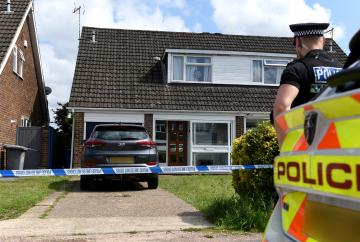
Police were called to an address in Dunholme address earlier this year (archive image)
Police were sent to a house in Dunholme End on the evening of June 10, where a four-year-old boy was pronounced dead at the scene.
The Nicholsons Centre in Maidenhead is scheduled to close its doors ‘at the end of June’, Areli has confirmed.
Adam Bouaziz. Photo from the family via Thames Valley Police.
Appearing as a witness, the van driver who ran over 18-year-old Adam Bouaziz last year became distressed and left the court suddenly during his testimony.
© Copyright 2024 Baylis Community Media CIC All right reserved