07:00AM, Friday 01 September 2023
Archaeologists who have spent the past month digging up an Anglo-Saxon site in Cookham are packing up after another successful year.
Staff and students from the University of Reading returned to the site for a third consecutive year, when this season’s dig commenced on Monday, August 7. It concludes tomorrow (Saturday).
A large communal building, timber-lined well and monastic cemetery are some of the discoveries made by archaeologists at the 8th-9th century monastery next to Cookham’s Holy Trinity Church.
Project lead Professor Gabor Thomas told the Advertiser that the project has ‘come on leaps and bounds’ since three weeks ago.
University of Reading's Professor Gabor Thomas spoke to @MaidenheadAds about the progress made at the #Cookham excavation over the past 3 weeks pic.twitter.com/7SCvE3jzsq
— Anaka Nair (@AnakaN_BM) August 30, 2023
One discovery is a cemetery containing over 50 deceased individuals – adults of both sexes and children – spanning three generations.
Carina Garland, the site supervisor, said there were ‘hints’ that the team were coming across a burial site in the dig last year and this year they have discovered the cemetery is ‘much bigger than they were expecting’.
She said: “While we have 14 grave cuts open, there’s more than 14 individuals being represented in the lower part of the site, so it was a very densely populated area.”
Finally, I caught up with @UniofReading site supervisor Carina Garland about the 'intercutting' graves in the Anglo Saxon cemetery in #Cookham pic.twitter.com/36nkUWapHc
— Anaka Nair (@AnakaN_BM) August 30, 2023
Professor Thomas added: “We can tell that we have fairly a extensive monastic cemetery here because we haven’t found the limits of it, and we know the cemetery was used perhaps over three or four generations because we have intercutting burials.
“We’re also getting a wealth of information about the burial rites, and analyses of the skeletal remains will give us a whole host of perspectives on the lived experience in the 8th and 9th centuries – a lot of human centred perspectives on life in Anglo-Saxon Cookham.
“In terms of the logistics of how a large scale excavation works, this year has been quite good for us. It may go down as being a terrible, and wet summer but for digging archaeology, it’s perfect.”
Professor Gabor Thomas from @UniofReading showed @MaidenheadAds the second site at the #Cookham dig with 'completely different' archaeology pic.twitter.com/w1WXPSbDxC
— Anaka Nair (@AnakaN_BM) August 30, 2023
Further discoveries include a well, with a preserved wooden barrel-lined shaft containing other wooden artifacts, and a substantial walled monastic enclosure fronting the River Thames.
He said: “The monastery was enclosed on a monumental scale up towards the river which probably defined the monastery as a sacred space – somewhere that was both physically and conceptually separated from the wider world.”
He also said that finding the ‘organic preservation of wood’ is rare in archaeology.
A large timber structure with an internal floor and hearth was one more crucial find.
Volunteer and @UniofReading Archaeology graduate, Tessa Blaikie explained the importance of an ancient hearth unearthed at the #Cookham site pic.twitter.com/YlS9hQrORh
— Anaka Nair (@AnakaN_BM) August 30, 2023
“It was one of the residential buildings where the monastic brethren would have gathered on a daily basis, perhaps functioning as a refectory where they had their meals,” Professor Thomas added.
“Altogether, we have just a wealth of information, far more that we were expecting in terms of being able to piece together the jigsaw puzzle of what this monastery looked like in Anglo- Saxon times.”
The remains of the monastery were first discovered in 2021 in a test excavation by staff from the University of Reading’s Archaeology Department and volunteers from local archaeological societies. A full-scale dig followed in the summer of 2022 when excavators uncovered an industrial and craft zone that would have supplied nuns with food and helped to transport imported items along the River Thames.
Charity Friends of Cookham Abbey will be leading a free site tour on the final day of the excavations. It can be booked via ticketsource.co.uk – search for Cookham abbey site tours.
Most read
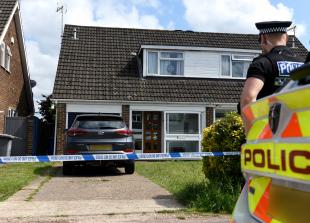
Police were called to an address in Dunholme address earlier this year (archive image)
Top Articles
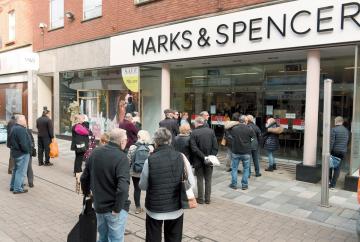
Archive image of the M&S Maidenhead store.
Marks & Spencer (M&S) have revealed plans to close its Maidenhead town centre store and create a new market-style foodhall at Stafferton Way Retail Park.
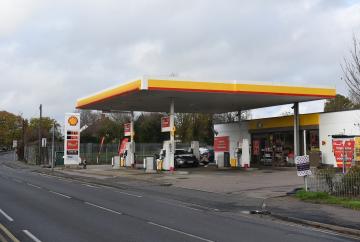
Police officers were called to the Shell Garage in Burnham Lane shortly before 1.45am on Tuesday following reports a woman had suffered serious injuries.
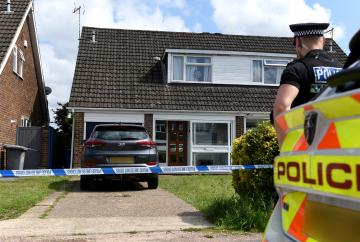
Police were called to an address in Dunholme address earlier this year (archive image)
Police were sent to a house in Dunholme End on the evening of June 10, where a four-year-old boy was pronounced dead at the scene.
© Copyright 2024 Baylis Community Media CIC All right reserved