05:02PM, Thursday 26 February 2026

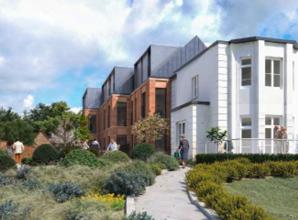
Credit: Pegasus Group
Plans for a cancer care clinic on the greenbelt in Cookham have been met with concerns about traffic and parking.
Dr Nina Fuller-Shavel and Hale Estate Berkshire Ltd have jointly submitted an application to redevelop Grange Farm, on Grange Road, into a specialist oncology centre and café-farmshop.
Permission is sought to transform the existing agricultural site into a new purpose-built centre for the Synthesis Clinic and the charity National Centre for Integrative Oncology (NCIO).
The centre will offer chemotherapy day units and medical consultations, including nutrition, physiotherapy, psychological support, exercise, and art and music therapy.
Developers say it would create a ‘world-class health-regenerating ecosystem’ by redeveloping neglected farmland and combining public and private cancer support services under one roof.
But several residents in nearby Burnt Oak fear the development will be ‘entirely car-dependent’ and the proposed 50 parking spaces are insufficient for the predicted 68 staff, patients and visitors.
In a written objection, resident Peter Ward said: “This is not an altruistic, futuristic cancer centre that will cure local people. It’s a money-making hack job that will benefit nobody except the speculative owners who have done nothing to help Cookham.
“Do not build a ridiculously oversized, overpriced and unproven facility on an already congested road in the heart of a small village.”
The latest proposals follow several rounds of pre-application discussions with council planning officers. An original scheme submitted in January 2025 included a day spa but was deemed unacceptable due to its scale and impact of the projected 400-plus daily vehicle movements.
Claimed benefits, such as healthcare innovation, research, and training, were acknowledged but considered insufficient to outweigh the harm to the greenbelt.
The initial scheme was also 8,616 square metres compared to the existing 1,730 square metre footprint.
The developer said the council supported the farm being classed as greybelt land in principle, leading to revised proposals focused on redeveloping the existing farm.
Plans for a 1,795 square metre new-build scheme, submitted later in the year, were deemed acceptable in principle by officers.
Access and traffic remain major obstacles for the developer. According to the applicant, 77 per cent of respondents were supportive or neutral towards the plans during a community drop-in event in November.
Traffic and road safety were the most common concerns raised, and nine formal objections have been submitted in the council, many focusing on highways and parking.
They warn ‘inevitable’ overspill parking would create congestion, obstruct emergency access, and negatively impact resident safety.
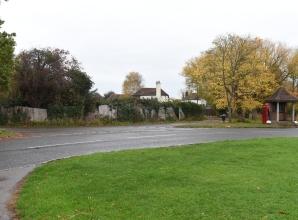
In his written objection, Mr Ward continued: “Grange Road is already a horribly busy road. With the cars and vans parked at the post office, and all the way down to Burnt Oak…it’s effectively a one-way road.
“It’s only because most are locals that we know where to duck and weave to allow contraflow to pass.”
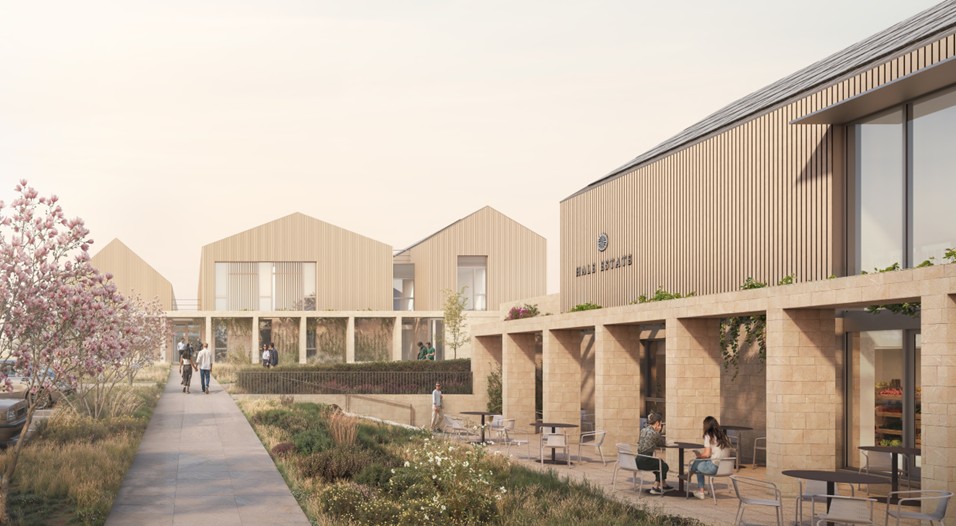
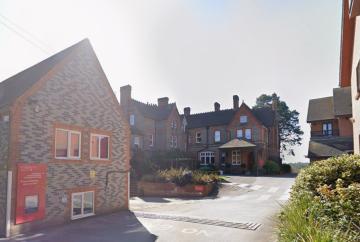
Image provided by Pegasus Group.
Another Burnt Oak resident, Simon Burrows, wrote: “The road lacks the physical scope for widening to accommodate this volume of vehicles safely.
“The proposal’s ‘minimalist’ footway provision is a critical failure. Forcing patients with potentially restricted mobility to walk in the carriageway where Grange Road becomes a rural lane is entirely unsafe.”
Objectors cited the applicant’s own transport figures, which predict up to 295 additional vehicle movements per day on Grange Road – a narrow residential road already operating at ‘capacity’.
Construction may also start in the summer, causing prolonged noise and disruption.
Concerns have been raised about limited public transport, pedestrian safety and the ‘worrying’ precedent of reclassifying greenbelt land to ‘open the door to incremental urbanisation’.
Objector Julia Munday wrote: “It is further creeping into the green wedge separating Cookham Rise and Cookham Dean, and a huge concern is that this is just phase one, which will set a precedent for future builds on this site.”
Others argue that, as a private medical facility with high treatment costs, it should not be considered a community use.
Existing buildings would be replaced with facilities of a similar size to the current footprint, according to developers.
The clinic’s ground floor would house treatment areas, a reception, a community kitchen, a gym, exercise studio, art and music therapy rooms, and chemotherapy day units.
Staff facilities, offices and meeting rooms would be on the first floor, and the estate’s building would provide office space and facilities for staff and deliveries.
A farm shop would sell herbs grown and processed onsite, with a café and kitchen above and a patio area for visitors.
Finally, there would be four self-contained patient lodges, and the rebuilt farmhouse would serve as a three-bedroom home with an annexe studio for visiting guests.
In a statement, Dr Fuller-Shavel said the project responds to a ‘clear and growing need’ for enhanced cancer support services.
“In that context, the Hale Estate proposals aim to provide a world-class centre focused not only on treatment support, but on quality of life, resilience and recovery,” she added.
“At the heart of the scheme is a doctor-led multidisciplinary model of cancer care, integrating the best of medical care alongside nutrition, lifestyle and psycho-emotional wellbeing support.
“The NCIO charity will extend benefits beyond private healthcare by providing equitable access to evidence-informed support for people living with and beyond cancer.”
Hale Estate estimates the development will create more than 50 jobs, with most based on site, as well as landscaping and biodiversity enhancements, sustainable drainage features, extensive tree planting and renewable energy measures.
The application is currently under consideration by the Royal Borough, and full details can be found on the RBWM planning portal using the reference 26/00354/FULL.
Most read
Stock image of Maidenhead High Street.
Top Articles

A woman was found dead in a car park outside Iceland and B&M Home Store in Montrose Avenue on Saturday afternoon (February 21).

A hotel by the Maidenhead riverside has reopened following major interior refurbishment.
Archive image of St George’s School in Ascot (Google)
A former head of year at an Ascot private boarding school has been banned from the teaching profession after she was convicted of sexual activity with a child.
© Copyright 2024 Baylis Community Media CIC All right reserved