Maidenhead Golf Course
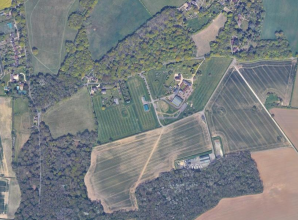
The final version of legal agreements for the controversial Maidenhead Golf Course redevelopment are ready – with more guidance laid out on what can and can’t be done there.
There are more than 470 documents surrounding the outline application for the site (reference 24/00091).
Nonetheless, there is more to come; an application of this size comes with ‘reserved matters’ applications, containing more in-depth plans over specific aspects.
As agreed when permission was granted in February, every such application that comes forward will be referred back to Maidenhead Development Management Panel for a decision.
Building work has to start within two years of the final reserved matters application, documents say.
Meanwhile, section 106 agreements – legal agreements between the local authority and developer – have pinned down what is expected there.
Schools and the green spine
There are clear deadlines surrounding when schools have to be built in relation to the homes.
Once the 500th home is occupied, the developer has six months to submit detailed plans for the primary school.
Once the 1,000th home is occupied, they have six months to submit detailed plans for the secondary school, along with agreed timetables for when the schools will actually be delivered.
Homes cannot be occupied unless foul water network upgrades are in place, or the council has agreed a phased approach with Thames Water that allows occupation to happen safely.
The green spine – ie, the main green route running through the development – is a key part of the scheme and has to meet clear minimum standards.
It should be lined with trees along its length and must be a set width at different points:
Environment
The scheme must deliver at least a 10 per cent increase in biodiversity. Before the 500th and 1,000th homes can be occupied, the developer must report back to the council to show how the agreed requirements are being met.
Each part of the site must also have its own biodiversity plan, setting out what will be delivered there and how it will be managed and looked after for at least 30 years.
Rushington Copse is given extra protection. A 25-metre buffer must be clearly set out and provided around it, and no building, parking or storage is allowed within that buffer at any time.
More generally, looking at noise impacts, detailed planning applications must also include updated noise assessments.
Design rules
Before the developer can submit detailed plans for housing in either area, they must first write a set of design rules for that area and get the council to approve them.
Once the council has approved the design rules for a neighbourhood, all detailed planning applications for plots in that area have to stick to those rules.
Each reserved matters application must include a plan showing the order the development will be built in.
Before any detailed plans are submitted for a neighbourhood, the developer must agree a plan setting out when homes, roads, open spaces and other infrastructure will be delivered, and how progress will be tracked. The strategy must show that the way the development is broken into phases does not go beyond what was already assessed for its environmental impacts.
Construction
There are controls on how construction is carried out.
Before work starts, the developer has to agree detailed plans with the council covering things like protecting wildlife and trees, limiting noise and lighting, managing dust and air quality, and how construction vehicles will be routed.
This includes keeping heavy traffic on main roads where possible and making sure public rights of way stay open or are safely diverted if they have to be closed.
Before building starts on each phase, the developer must agree a plan for investigating and dealing with any archaeological remains.
Homes in that phase cannot be occupied until the investigation is finished.
Most read
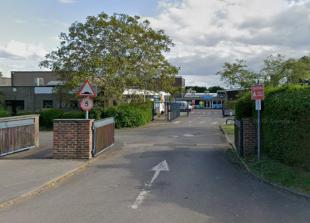
Archive image of the entrance to Newlands Girls' School (Google)
Top Articles
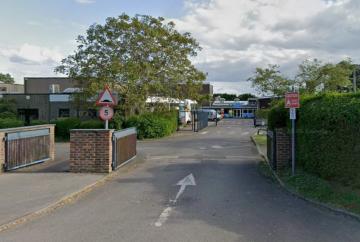
Archive image of the entrance to Newlands Girls' School (Google)
A former head of music at Newlands Girls’ School in Maidenhead has been banned from teaching indefinitely over a litany of ‘sexually motivated’ advances on students.

It’s the ‘end of an era’ for Maidenhead Golf Club after members played a final round at their Shoppenhangers course before moving off.

Liverpool Football Club jerseys, red balloons and ribbons adorned streets across the town to commemorate Reuben Virdee, 11, who passed away earlier this month.
© Copyright 2024 Baylis Community Media CIC All right reserved