05:00PM, Tuesday 01 October 2024

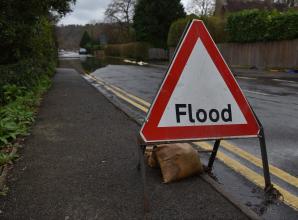
Stock image via Pixabay
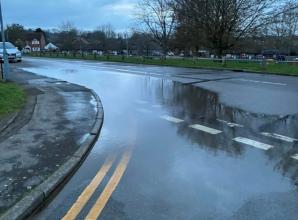
Maidenhead’s endured its ‘wettest month for more than 150 years’ in September, a weather analyst has found.
Roger Brugge, a former Reading University meteorologist, measured rainfall from a weather station in Boyn Hill.
His results for September showed 228.9mm of rain fell in Maidenhead – 4.25 times the average for this time of year - making it the wettest of any month in the town since before 1859.
“When I went out there in the morning to empty the rain gauge, the bottle was full to overflowing,” he said.
“I’ve been observing the weather for 50 years in various places… places like Maidenhead.
“Never have I seen the gauge being full in 24 hours.”
Mr Brugge’s analysis showed rain fell for 63 hours in Boyn Hill over September - and was recorded on 18 days.
The wettest 24 hours was between September 22 to 23 when 93.2mm of rain fell.
Thunder was heard on five days.
Mr Brugge’s analysis of historical data showed the closest comparative month for rainfall in the Maidenhead area was when 210.3mm fell at Bisham Vicarage in October 1903.
Although the temperature for September was close to the average, downpours were brought about by several slow-moving weather fronts which passed over the country.
England was ‘right under the centre’ of weather fronts for a period, which Mr Brugge, said contributed to the persistent rainfall.
And residents could be forgiven for thinking this rainfall was not as bad as that which caused major flooding in January.
“We’d come in after a fairly dry spell,” Mr Brugge said. “The start of September, I was making notes that the ground in my garden was dry.
“There was a fair bit of scope for the rainfall to be soaked in.”
He added some heavy periods of rainfall had occurred overnight so may not have been as noticeable.
“Had it happened during the day and you’d been driving through it, I think there would have been much more acceptance it was such a wet month,” Mr Brugge said.
Mr Brugge said, in the context of global warming, it was likely the UK would experience more heavy rainfall in the future.
He said: “If you warm a parcel of air it can actually hold more moisture - we know the air is warming.
“The British Isles is next to a source of water – the Atlantic Ocean – and we get prevailing winds from that direction therefore there’s more evaporation from the water into the air.
“Then, as the air meets the British Isles it’s forced to rise over mountains and hills heading towards cooler conditions to the north and northeast, typically – it will start to cool and therefore drop water.
“That’s the geography, but the fact is it's happening in warmer conditions and you will notice precipitation falling.
“That’s just the basic physics, warm air holds more water and if that air is cooled then there’s more water to fall out. “
Historic data was collected from publications including British Rain which records rainfall events up to the early 1800s.
Most read
Top Articles

A woman was found dead in a car park outside Iceland and B&M Home Store in Montrose Avenue on Saturday afternoon (February 21).

A hotel by the Maidenhead riverside has reopened following major interior refurbishment.
A teenage boy has been found dead at the historic Eton College.
© Copyright 2024 Baylis Community Media CIC All right reserved