06:00AM, Wednesday 16 October 2024

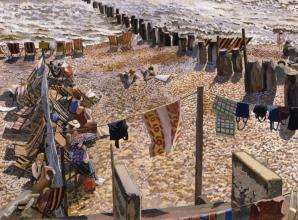
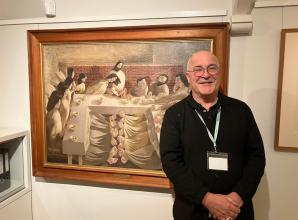
Sarah Tubb and the Heavenly Visitors (1993) – Copyright Stanley Spencer/Bridgeman Images
A new exhibition exploring the influence of Stanley Spencer’s ‘personal reality and extraordinary imagination’ on his art opens next month.
‘Seeing the Unseen: Reality and Imagination in the Art of Stanley Spencer’ will use the Stanley Spencer Gallery collection to delve into his inspirations.
This exhibition will show how Spencer’s reality merged with his imagination.
In Spencer’s words, ‘“Everything has a sort of double meaning for me, there's the ordinary everyday meaning of things, and the imaginary meaning about it all, and I wanted to bring these things together.”
Spencer’s art is personal, strangely mysterious, and sometimes beyond the comprehension of an unseeing eye.
He belonged to no major art movement and largely created autobiographical works.
Historians believe his originality flowed from his ability not only to see with his eyes but with his soul.
Spencer’s artistic impulse drove his very being. His genius lies in his ability to see beyond visual reality.
Every work is layered with a mixture of acutely observed reality, memory, fantasy and spirituality.
Born in Cookham in 1891, Spencer is synonymous with the Thames-side village from which he took much inspiration.
His love for Cookham and his childhood memories of family and local life were the bedrock of his art as he often returned from his travels to the village of his birth.
He painted what he loved, and it was his compelling motivation. Spencer spoke of his desire to ‘marry’ his works – to ‘marry’ his subjects to Cookham and often to a religious experience.
The exhibition will also invite the viewer to look with their own eyes beyond what they see, just as Spencer did.
Stanley Spencer brought ‘the angels to Cookham’ as seen in his striking painting Sarah Tubb and the Heavenly Visitors (1933).
In his vivid imagination, the heavenly host arrived to cheer up Sarah, who had flopped to the ground to pray.
She feared the end of the world and Spencer brought her things to comfort her.
Spencer also set many biblical stories in his local environment, following a long artistic tradition.
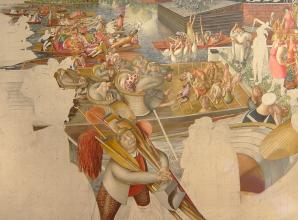
This includes Christ Preaching at Cookham Regatta (1953 -59) and The Last Supper (1920) at Cookham Malthouse.
Here, Christ is betrayed to the Roman soldiers by the back wall of his home, Fernlea on Cookham High Street.
Patricia at Cockmarsh Hill (1935) is in keeping with his love of nature, and the fields and meadows surrounding his home.
He sets his second wife Patricia Preece against a background of Cockmarsh Hill and, as he described, ‘marries’ her to the landscape so that the bushes, thistles, her necklace and hair become one.
Other works also on display are The Betrayal (1919) and The Beatitudes of Love: Contemplation (1938).
Seeing the Unseen: Reality and Imagination in the Art of Stanley Spencer will run from November 7, 2024 until March 30 2025.
For more information visit www.stanleyspencer.org.uk
Most read
Top Articles

A woman was found dead in a car park outside Iceland and B&M Home Store in Montrose Avenue on Saturday afternoon (February 21).

The owners of a Queen Street restaurant are content with being the inconspicuous hidden gem of Maidenhead, despite the numerous accolades bestowed upon it since opening five years ago.
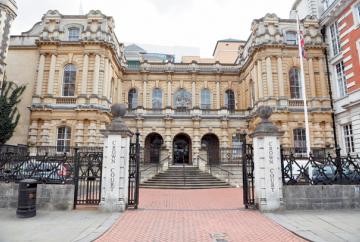
He let dealers store 373g of cocaine in his shed - which has a street value of £37,280. He was paid in f £6,800's worth of cocaine for this.
© Copyright 2024 Baylis Community Media CIC All right reserved